
New EU regulation for wine labels
Classic label or modern QR code. Discover exactly what the new regulation entails and how you can easily ensure your wine labels comply with the rules.
Team • 2026-03-03
EU Regulation 2021/2117
As of Dec. 8, 2023, a new EU regulation comes into effect that requires certain information to appear on your wine labels. All wine produced after this date falls under EU Regulation 2021/2117, also known as the CAP reform which requires wine producers, bottlers and retailers to include information about ingredients, nutritional values and energy values on wine labels. Regulations previously applicable to food products are now being extended to the wine industry to increase product transparency. The changes apply to companies that produce, bottle or market wine. How should this be implemented? There are two ways to implement the regulations. You have a choice between the traditional nutrition label and the innovative e-label. Note: In both variants, information on allergens and energy values must be provided in printed form on the bottle label.
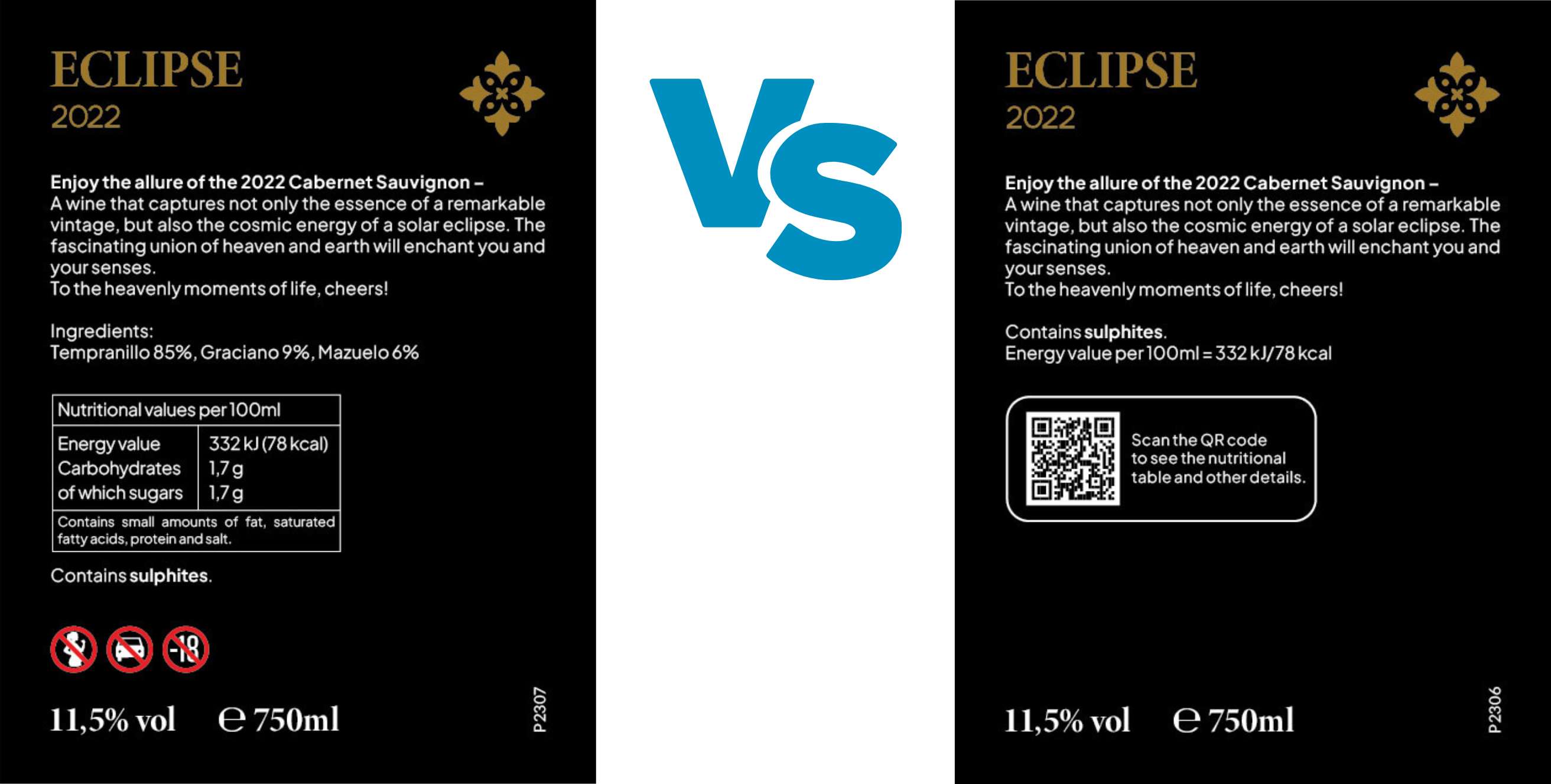
e-Label
With a so-called e-label, mandatory information is provided on the label via a QR code. These digital labels (also known as e-labels ) offer many advantages, such as more room for creative design and/or the ability to make the label smaller. However, this type of implementation also has a few drawbacks. Internet access and a smartphone with internet access are required to successfully scan the QR code and view the underlying content. However, neither of these should be seen as a given. Moreover, the QR code must be correctly applied and error-free for consumers to access the information. Therefore, implementing a QR code to provide information is a good idea, but can lead to technical challenges during implementation.
Classic nutrition table
We know this option from the food industry. Here the information is placed on the label in printed form, including a table of nutritional values and a list of ingredients. In this case there are no technical challenges, since all the information consumers need to know can simply be printed on the label. However, your usual label design must be expanded to include the table and other (mandatory) information. This may mean you need larger labels or save space by omitting design elements.

Here is your step by step guide:
- Gather the required information: To meet the new requirements, you must know or have all the specific values of your wine determined.
- QR Code or not: Decide whether to go for the digital method with a QR code. If yes, contact your website administrator. If you choose the traditional label, all mandatory information must be printed on the physical label. Note: Information on allergens and energy content must be printed on the label in both cases.
- Label design: Because of the extra information, the design must be changed or redesigned. Make it easy on yourself and order a print file service PRO package and we will make sure the new information is integrated into your existing label design. If you plan to completely redesign your labels, our design service is at your disposal.
- Coordination with responsible authorities: You yourself are responsible for the correctness of the texts on your wine label and therefore coordination with the respective authorities is recommended. We recommend that you submit the relevant data and design to them prior to having your labels printed.
- Production of the labels: You can easily order your wine labels through our website. If you have any questions, do not hesitate to contact our customer service. Our experts are already well aware of the upcoming changes and are ready to advise you.You can reach us Monday through Friday from 9 a.m. to 5 p.m. at info@unieketiket.nl, or at (+31) (0)30 808 05 97.
- Delivery: You will receive your labels within a few days, ready to label your wine bottles. Upon request, we also offer express production. Please feel free to contact us about this!

Questions
Keep up with the latest trends
with our newsletter